
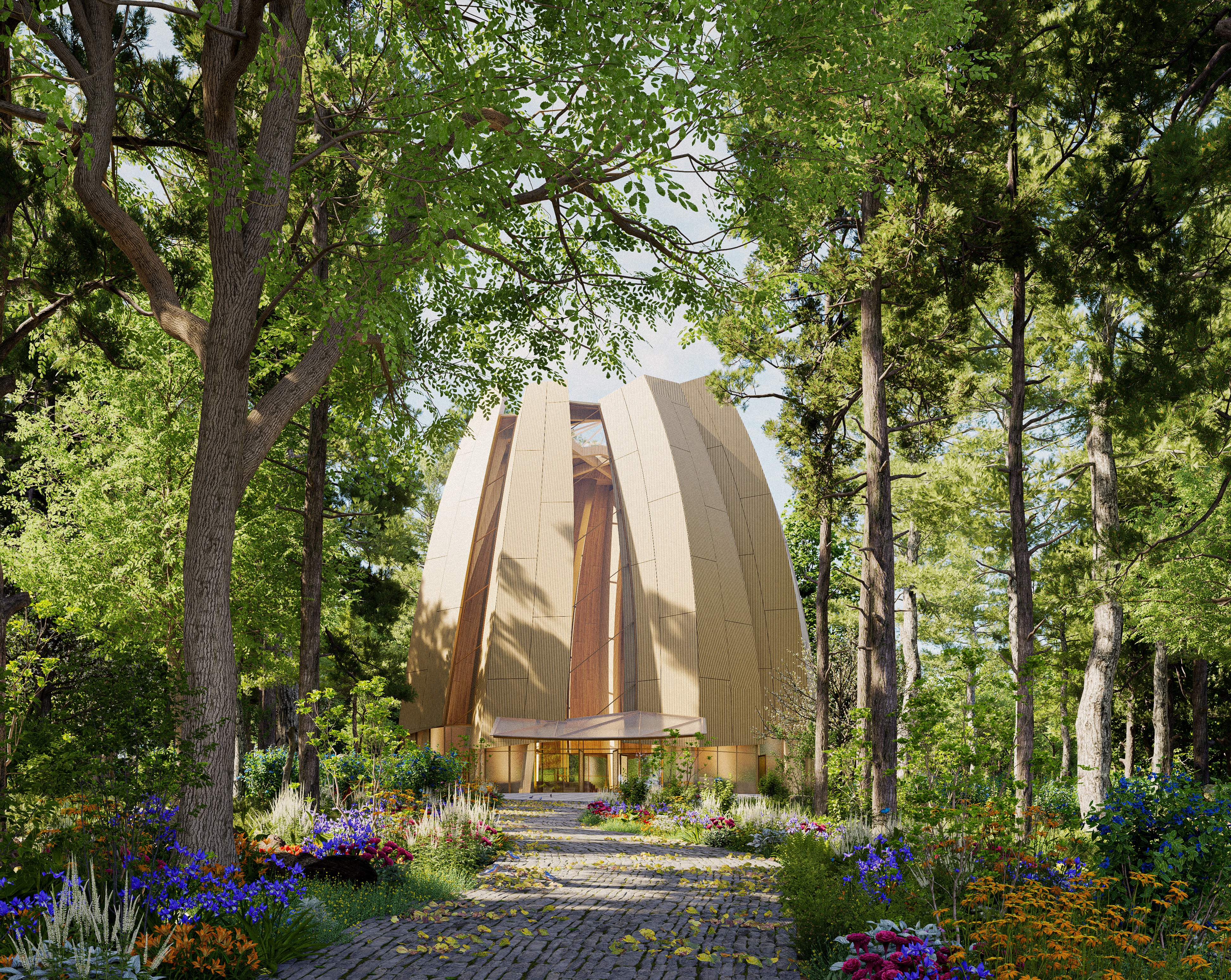
The design reflects the aspirations of Canada’s diverse inhabitants and is deeply influenced by the land on which it will be built.
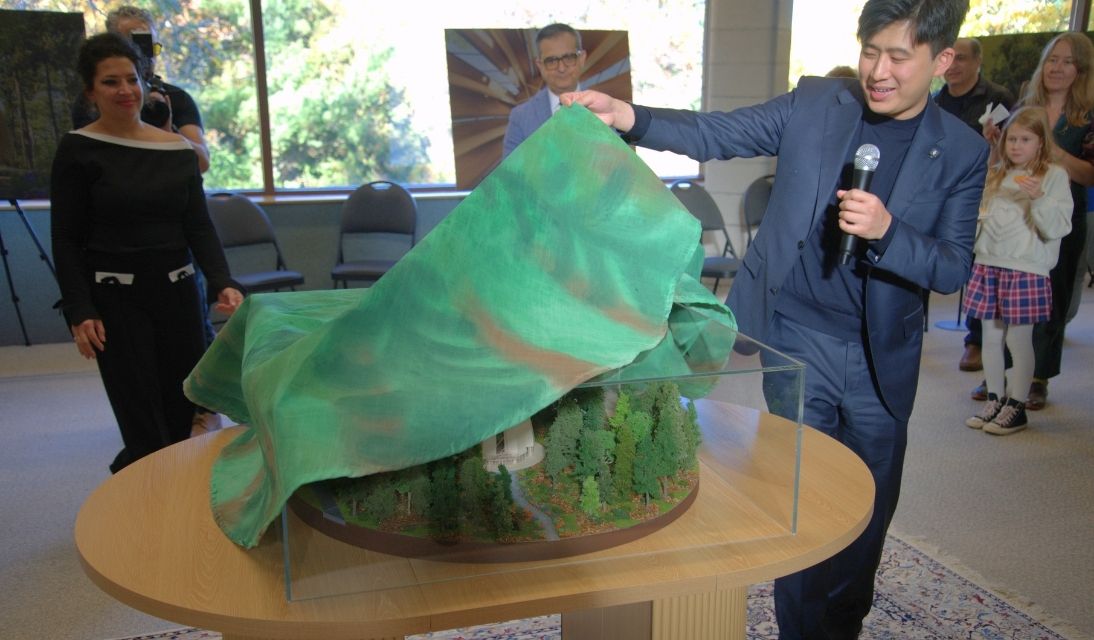
The journey toward building Canada’s national Bahá’í House of Worship has reached a new milestone with the unveiling of the temple’s design.
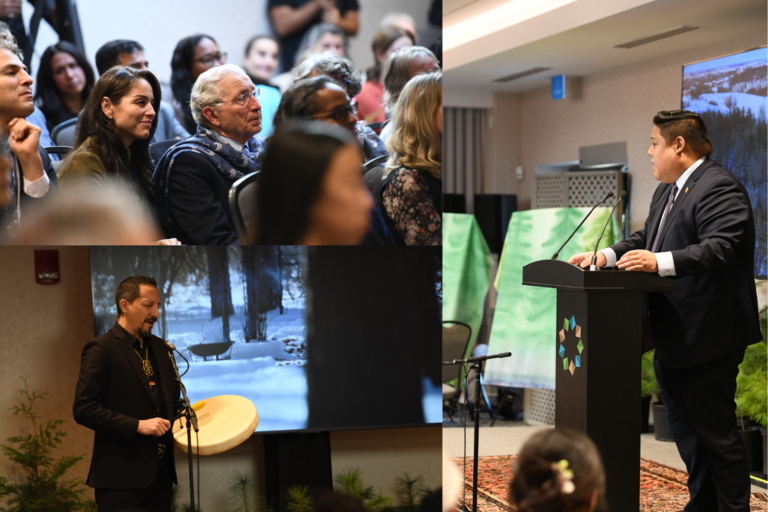
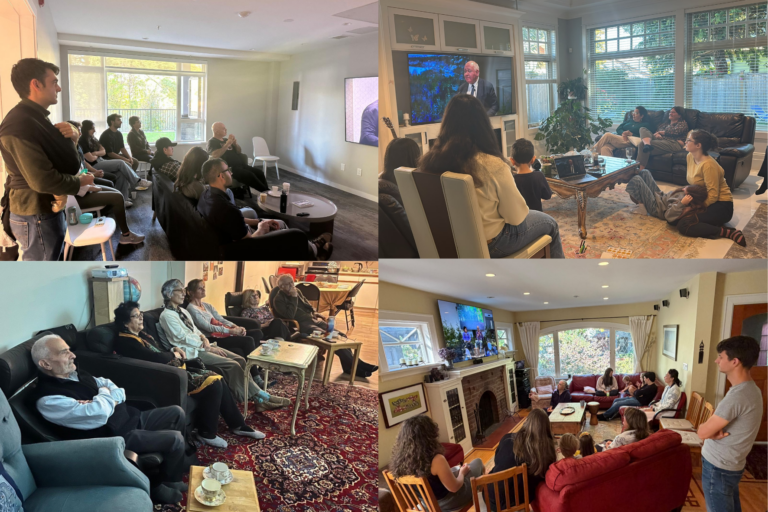
On October 17, a gathering and program were held near the temple site to formally announce and present the design of the temple. The gathering of some 115 people included special guests from the City of Markham, a member of provincial parliament for Don Valley North in Toronto, youth and families from the neighbourhoods surrounding the temple site, and representatives from communities across Canada.
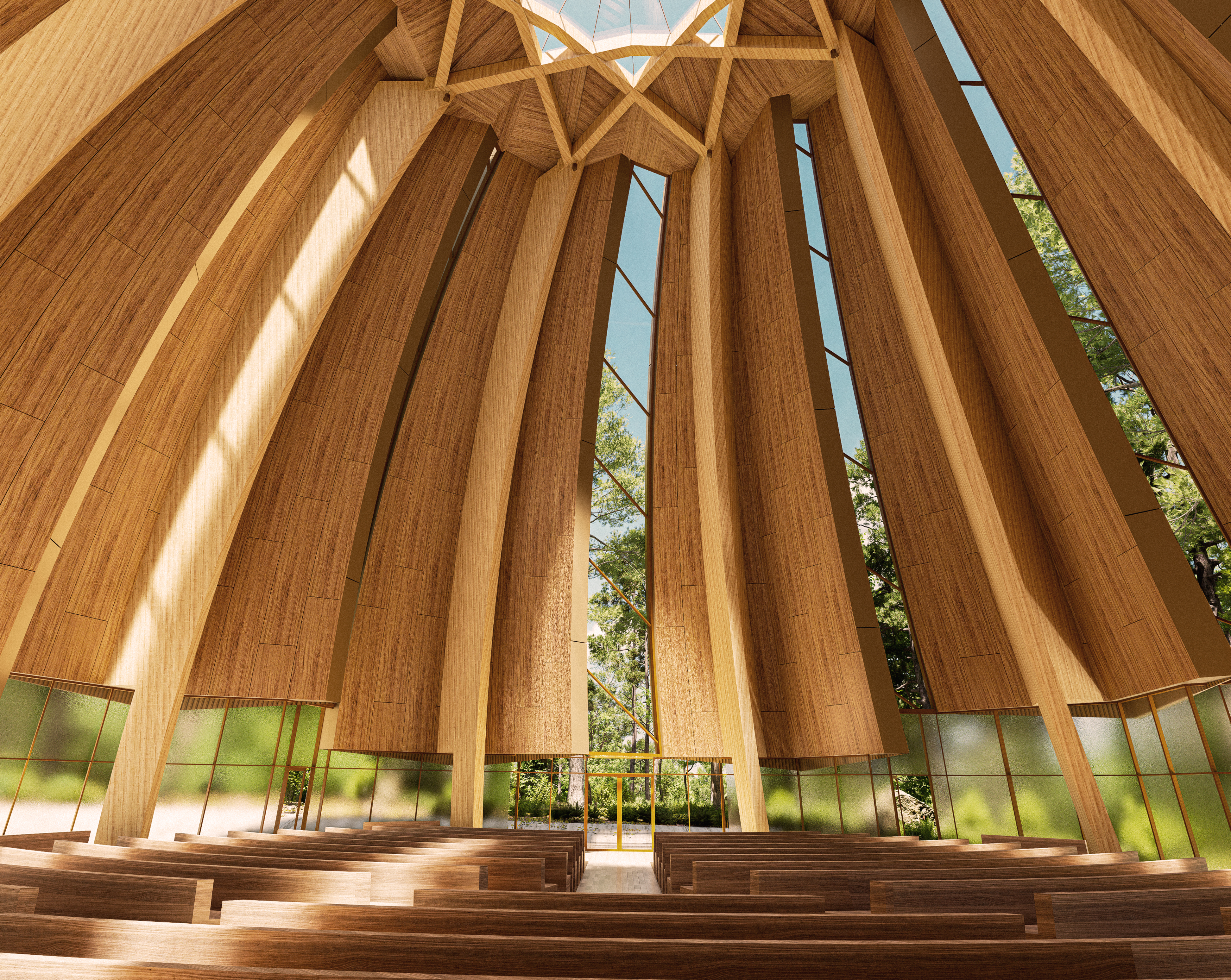
Suited to its unique environment amidst the trees, the edifice will be modest, incorporating transparent elements and integrated into the surrounding woods. The design is inspired by the idea of unity in diversity, a principle central to the Bahá’í teachings and to the context of Canada.
The architect, James Jing Yi Jiang from Vancouver, B.C., describes the design as follows: “Nine identical panels, arranged in an asymmetrical order, create a varied yet cohesive composition, expressing the idea that differences do not need to disappear for a greater whole to emerge. Beneath the panels, a symmetrical structural rhythm provides an underlying order, allowing individual elements to come together as one.”
The temple site has been a place of prayer and meditation for decades. In 1958, the National Spiritual Assembly of the Bahá’ís of Canada acquired land in Toronto as an endowment to build a temple. It later sold that land and, in 1968, secured the current property just outside Toronto in Markham, Ontario.
The program for the unveiling highlighted this history, recognizing that stewardship for the land goes back generations. Bob Watts, a Bahá’í of the Mohawk and Ojibway Nations—whose grandmother was the first Indigenous Bahá’í in Canada—shared reflections on the significance of the land, in conversation with his grandson, Nico Diaz. They recalled the sacred responsibility of those who have cared for this land over time, and how fitting it is that a House of Worship rises from it as a source of healing in this time of growing divisions.
The architect described how the design acknowledges the land as an active, living presence. He explained, “Through its openness and natural wood tones, the temple aims to blend into the forest, creating a place of prayer and reflection that feels as though it has always been there.”
He continues, “The form of the curvatures is an impression of the wind—like traces and ripples left by the breeze on the temple.”
As part of the design process, Mr. Jiang met with local youth, many of whom regularly pray at the temple site. He shared, “When the youth described their idea of the future temple, it was as if it had a personality. They said the temple is like a mother, it’s like a friend, it’s like someone who can support you when you run into difficulties.” After these conversations, he adjusted the temple’s colouring to be warmer and more welcoming.
Chief Margaret Sault of the Mississaugas of the Credit First Nation, who provided a written statement for the occasion, observed: “A place of worship is more than a building. It can be a place where people come together, find peace, reflect on their responsibilities to each other and strengthen their connection to community.”
The Bahá’í House of Worship comes from the Arabic word Mashriqu'l-Adhkár: “the Dawning-place of the Remembrance of God.” Karen McKye, Secretary of the National Spiritual Assembly of the Bahá’ís of Canada, remarked, “It is a place to draw inspiration and strength to serve our community, our families, our professions, and thus brings together two essential, inseparable aspects of human life and purpose: worship and service.”
Although the site was purchased over 50 years ago, this has not been a period of waiting, but one of community flourishing. In small settings across the country, children and youth, adults and elders, have drawn on an educational process that affirms community life as a vital sphere of social transformation.
Ms. McKye reflected on this period, “We needed to build our own capacity to raise up vibrant communities that would be mirrors to the same process of building a House of Worship.” Then, in 2023, the Universal House of Justice joyfully announced that it was time to build the temple.
Preparations at the site have now been gaining pace. This past summer, five youth drove over eight hours from various parts of Québec to serve at the temple site, diligently removing invasive plant species. One of these youth, Yohann Lamorie, shared, “Since we are helping to make the place better for the construction of the temple, it helps us to have a sense of ownership...” Alif Nakhostine, another youth, confirmed, “It feels like it’s our temple.”
Mayor Frank Scarpitti of Markham, Ontario, the locality where the temple will be constructed, commented: “At the core of your beliefs are the oneness of God, of religions and humanity. Here at Canada’s Bahá’í House of Worship, it is oneness with the natural land, which will be an incredible canvas for those who come here.”
Jonathan Tsao, member of provincial parliament for Don Valley North in Toronto, spoke about his family’s history with the Bahá’í Faith, as the great-great-nephew of Dr. Y.S. Tsao, one of the early Bahá’ís in China. He shared, “You do not walk alone in your goal of a more equal society. The belief in the oneness of humanity is one that we fundamentally share together—as Christians, as Muslims, as Bahá’ís, as humans.”
Since the announcement last month that a temple design and architect had been chosen, a spirit of anticipation has grown. Over 3,000 Bahá’ís and their friends across the country and beyond watched the unveiling via a livestream broadcast.
When completed, the Bahá’í House of Worship will be the first constructed in Canada. Around it, the Don Valley Education Centre serves as a facility for the training institute, offering educational programmes for children, youth and their families.
Ms. McKye stated, “The temple is a gift to Canada as a nation. It is a place of acceptance, of oneness, and belonging.”