
What kinds of individual, cultural, and systemic transformation is needed for advances in gender equality to be lasting? That was a central question addressed in two panel discussions held in March at the New York office of the Bahá’í International Community (BIC).
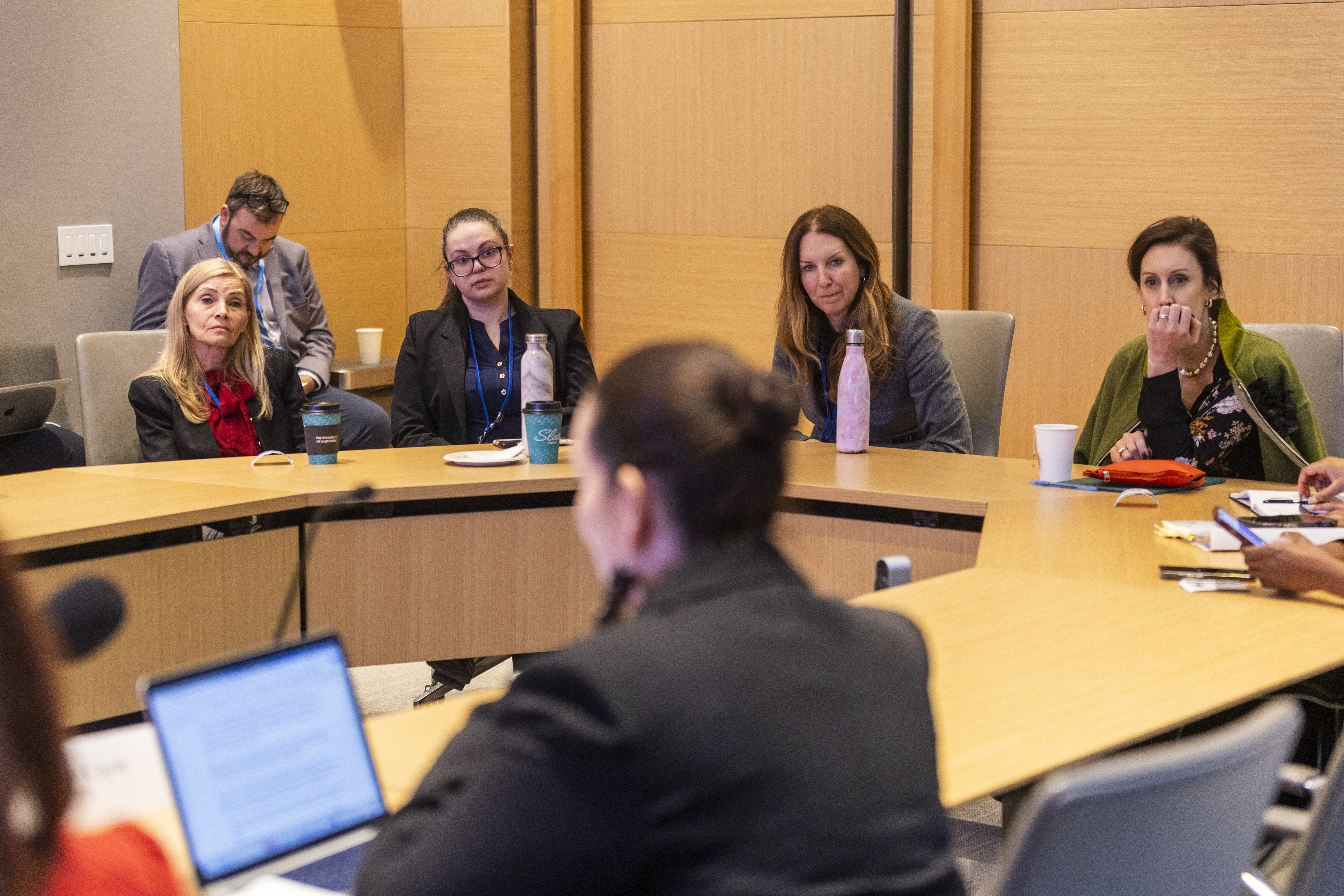
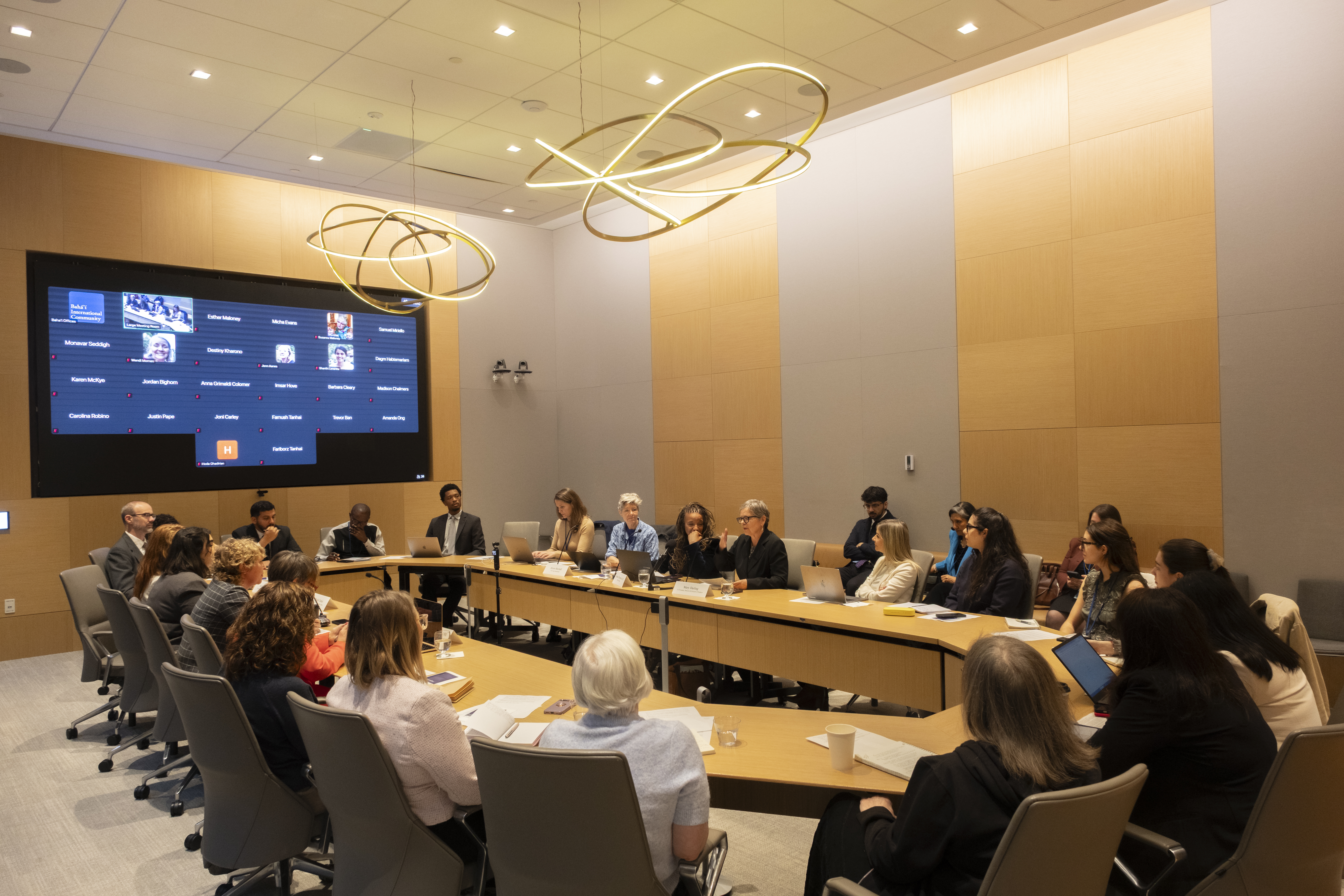
The Office of Public Affairs for the Bahá’í Community of Canada co-hosted two parallel events at the 70th United Nations Commission on the Status of Women. The first was a panel discussion in collaboration with the UK Bahá’í Office of Public Affairs with sponsorship from the Canadian and UK government. The second event was co-hosted with Crossroads International and the Barbra Schlifer Commemorative Clinic.
The first panel, titled “Reconceptualizing Justice at Work: Structural and Cultural Transformation” stated in the opening remarks, “Workplaces are not just for economic productivity. They are places that help us to be involved, to contribute to society, to be involved with others.”
“They are places where people will experience either competition or collaboration. Division or unity,” the remarks continued. ‘And yet, for most women, those workplaces have been designed without their realities in mind.”
Justice in the Workplace
Gillian Unsworth, Deputy Director of the Women’s Equality Division at the UK Government’s Office for Equality and Opportunities, echoed the opening remarks. She explored the root causes of the gender pay gap and the impact of the gender pay gap reporting requirements implemented by the UK Government since 2017.
It has created accountability for large employers, Unsworth noted, to publish their gender pay gap statistics and action plans to address them. Changes to the pay gap, she said, “create an environment that enables women to succeed. And the reality is that if we fix the systems and processes, it enables everyone to succeed.”
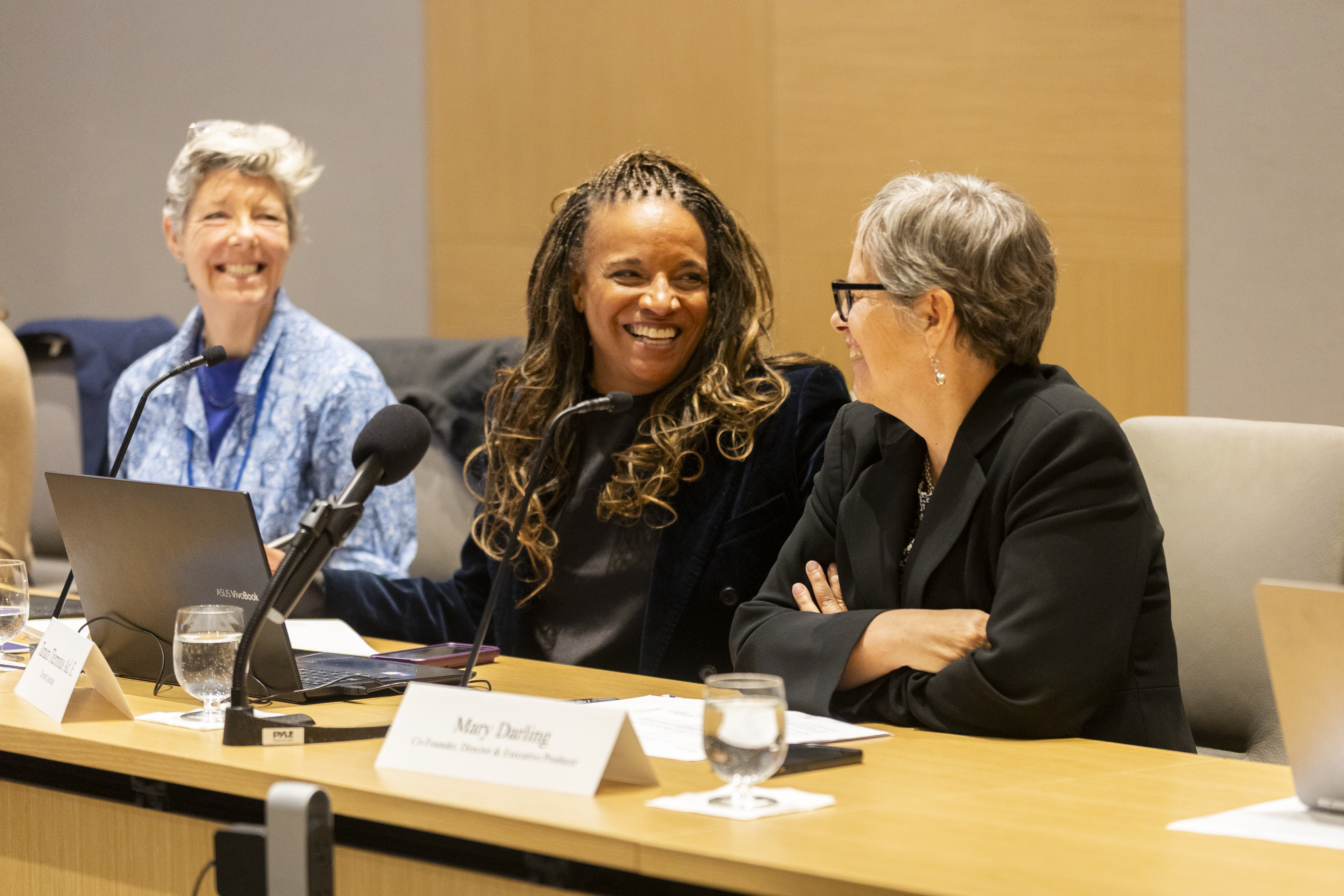
“Inequities and inequalities are often not intentional, they can come from attitudes that are inherited or ingrained,” offered Mary Darling, drawing on her experience as Co-Founder, Director and Executive Producer with WestWind Pictures, where she has been actively working understand and fight against the norm of the gender pay gap. “Change doesn’t happen all at once,” she remarked. “It requires courage.”
What does justice in the workplace look like? Alison Marshall, CEO of Age International, defined it as "implementation of human rights while recognizing intrinsic humanity of all workers.” She highlighted the continuing relevance of the 1948 Universal Declaration of Human Rights to this conversation and brought attention to age and disability as additional axes of discrimination that women experience.
Tamara Thermitus, Lawyer Emeritus and Representative for the Diversity Institute at Toronto Metropolitan University, built on the conversation.
“My life as a woman is my life as a black woman. I cannot separate myself in two, or three, or
seven parts. I’ve been discriminated as a woman, I’ve been discriminated as a black person and I’m sitting in an intersectional position.”
She noted the importance of having judges and administrative boards with members who have an understanding of the social context of marginalized people and the discrimination they face.
“Law in the books is not law in action,” she said.
Community-Focused Solutions
The conversation continued at the second event, a roundtable titled “Community Rooted Solutions for Justice to End Gender-Based Violence Beyond Punitive Methodologies.” It was held on March 13, 2026 in collaboration with Crossroads International, BIC, and the Barbra Schlifer Commemorative Clinic.
The goal of the discussion was to assist participants to gain insight into transformative, community‑driven justice approaches and to understand practical alternatives to punitive models.
While participants acknowledged the role of legislation in protecting women, several stressed that lasting change requires addressing the root causes of violence by shifting societal attitudes, norms, and beliefs over time.
Dr. Andy Tamas emphasized the role of socialization and education in shaping men’s identities. Drawing on his work with Men’s Shed Canada, he noted that “us and them” understandings of identity can contribute both to violence and to punitive approaches in responding to it.
Many contributors agreed that the justice system needs to work coherently with the community to serve all members.
Deepa Mattoo, Executive Director of the Barbra Schlifer Commemorative Clinic, stressed the need for community-based alternatives to carceral approaches to gender-based violence.
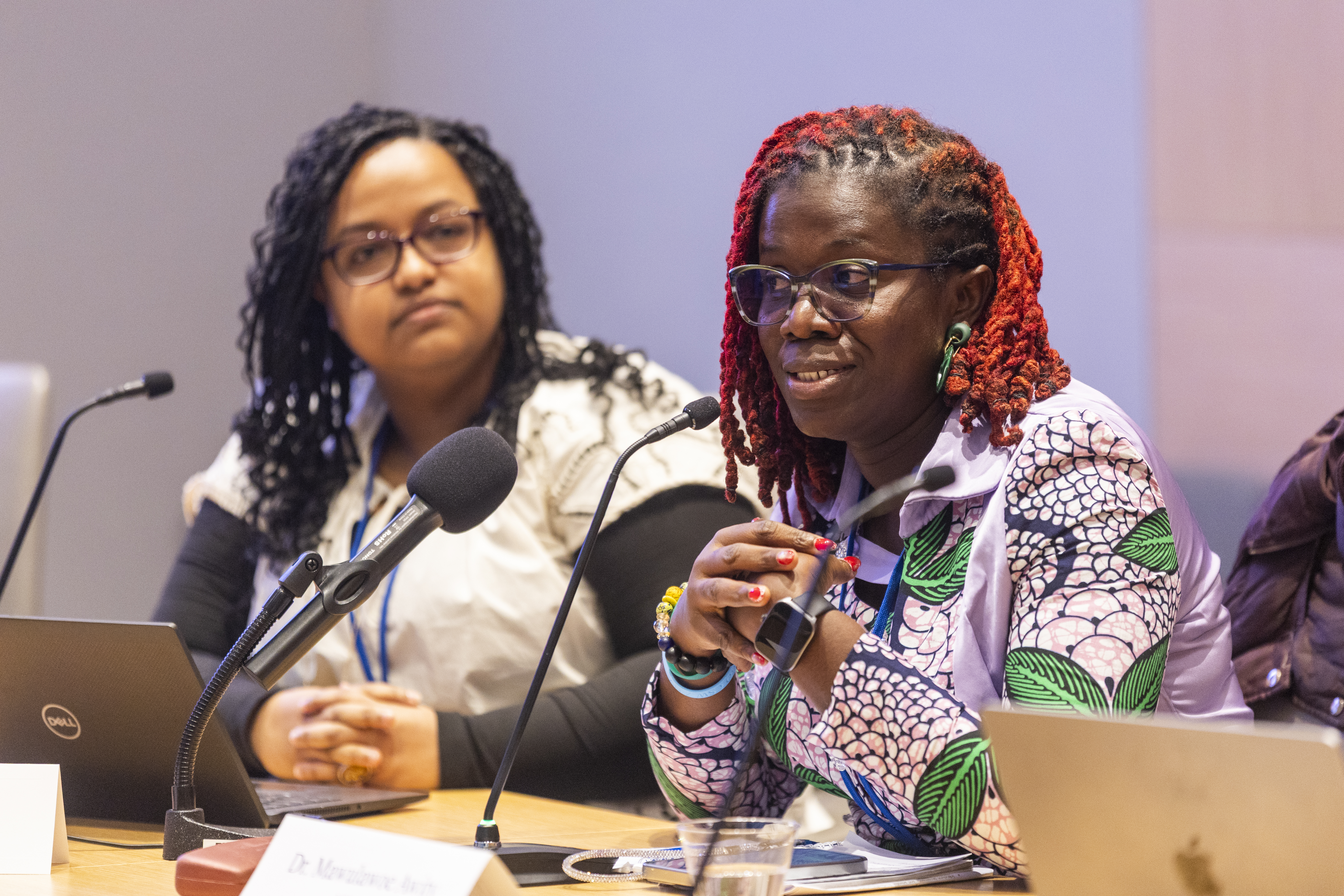
Dr. Mawulawoe Awiy offered valuable insights from Ghana, as the Executive Director of The Network of Women in Growth (NEWIG). She highlighted the impact of economic empowerment, the role of women leaders, and the importance of community conversations in protecting women and preventing gender-based violence.
In response to these challenges, moderator Hilina Wassihun Meseret of Crossroads International underscored the need for justice systems to be co-created in order to serve all members of society.
As Marissa Kokkoros, Founder and Executive Director of Aura Freedom International, noted, in order to end the culture of violence, systems need to recognize the source of the behaviour.
“If we really want to end gender-based violence, we must look upstream,” she said. “Upstream is prevention and eradication.”
“That's where we prevent people from falling in the river, or being pushed into the river.”
One important objective of the discussion was to further the building of cross‑regional partnerships that support responses to gender-based violence. Another was to identify frameworks and tools for survivor‑centred accountability and prevention. At the end, participants left looking towards future collaborative initiatives.